
We watch the Breville Barista Express dominate every espresso roundup because the built-in conical burr grinder removes the dose-and-grind decision that intimidates beginners. We see the same Barista Express owners six months later complaining the grinder lost its calibration and the espresso went watery. The grinder is mechanically the most stressed part of any espresso setup, and integrating it into the body of a $750 machine means when the burrs need replacing, the espresso side is held hostage to a service appointment. Three espresso-only machines age better, and a $200 Baratza Encore paired with any of them outperforms the all-in-one within the first year.
What the integrated grinder actually saves you
The Barista Express bundles three things into one footprint: a 15-bar pump, a 54mm portafilter group, and conical steel burrs feeding a dose chamber. Roundups credit the integration with simpler workflow because beans go in the top hopper, espresso comes out the bottom, no second appliance required. That argument holds for the first 200 shots while the burrs are still factory-aligned and the dose calibration matches the bean weight you started with.
After 200 shots two things happen. The burrs lose alignment by fractions of a millimeter, which shifts particle distribution wider and produces uneven extraction across the puck. Second, every bean change requires re-dialing the integrated grinder because the dose-by-time mechanism cannot adjust for varying bean density across roasts. A separate grinder solves both: you replace burrs as a $40 part, and a quality grinder handles bean changes by weight rather than time. The all-in-one trades long-term flexibility for first-year convenience.
Pick one: Breville Bambino Plus
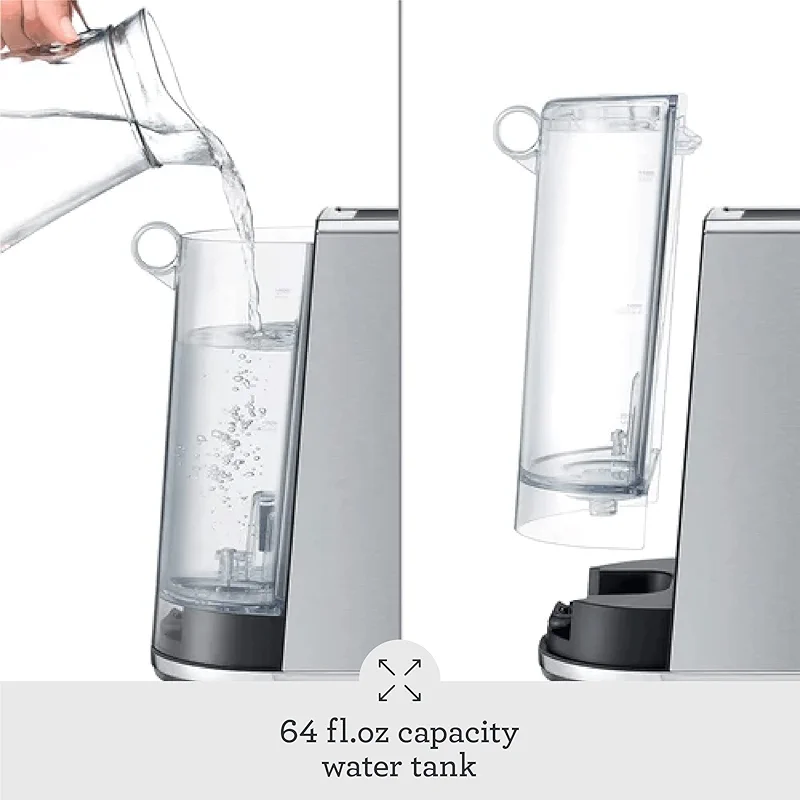
The Bambino Plus delivers the same 15-bar Italian pump as the Barista Express in a footprint half the size, with a 54mm portafilter that shares accessories across the Breville range. ThermoJet heating reaches brew temperature in three seconds, and an automatic milk texturing wand pulls microfoam at three preset temperatures and three foam levels for the latte and flat white side of the workflow.
Removing the integrated grinder drops the price by roughly $250 and eliminates the calibration drift problem entirely. You feed pre-ground from a Baratza Encore or 1Zpresso K-Ultra, and the Bambino pulls espresso identical to the Barista Express because the brewing geometry is the same. When the Bambino's pump eventually needs service after several thousand shots, your grinder keeps working independently and serves any future espresso machine you buy.
We rate the Bambino Plus the cleanest entry point into separated-component espresso, and at this price point the math against the Barista Express is straightforward. Spend the $250 you saved on a real burr grinder. The combined setup costs the same and outlasts the all-in-one by years.
Pick two: Gaggia Classic Evo Pro
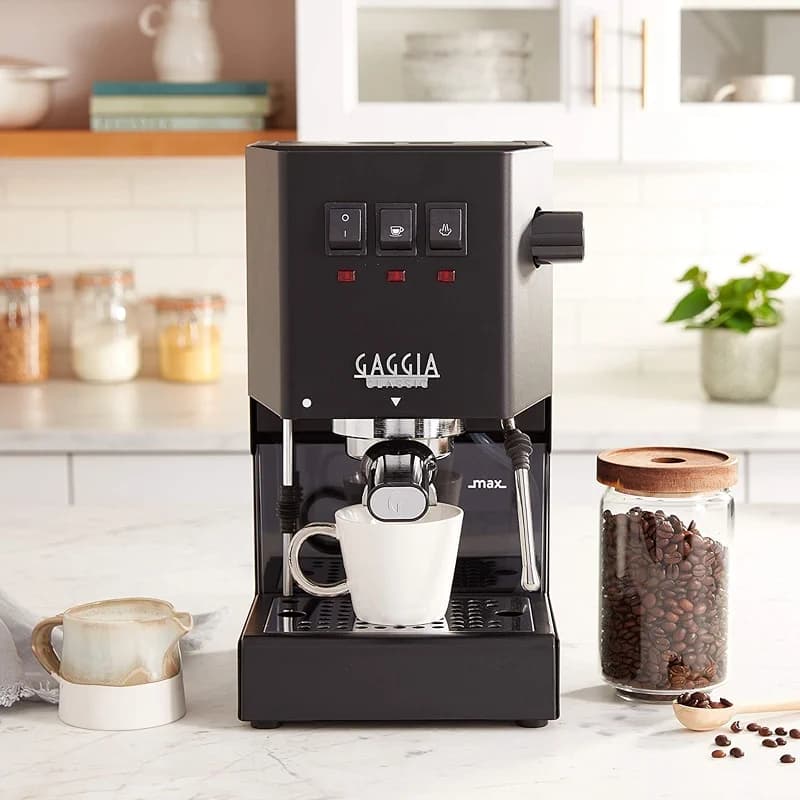
Gaggia builds the Classic Evo Pro around a 58mm commercial portafilter that pulls professional-volume shots with the same group-head geometry used in many cafe machines. The aluminum boiler with stainless lining holds steam and brew temperature with thermal mass that single-boiler home machines often lack, and the rocker switches expose direct controls for brew, steam, and water rather than hiding them behind firmware menus.
Pairing the Classic Evo Pro with a Baratza Sette 270 or Eureka Mignon Specialita produces espresso that competes with $2,000 prosumer setups at a fraction of the cost, and the 58mm portafilter standard means you upgrade your basket and tamper into any future commercial-grade machine without replacing accessories. Gaggia parts inventory remains widely stocked because the Classic platform has run nearly unchanged since the 1990s, which makes 5-year ownership realistic in ways the firmware-dependent Brevilles cannot match.
The Classic Evo Pro suits buyers who want hands-on espresso control and accept the learning curve in exchange for longevity. Skip it if you want one-button milk or automatic shot timing, since neither is included.
Pick three: Rancilio Silvia
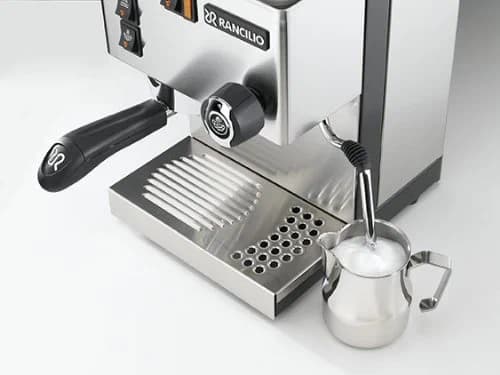
The Rancilio Silvia uses a 58mm commercial portafilter and a brass boiler that owners regularly run for ten-plus years with periodic gasket replacement. The single brass boiler architecture means brew and steam share thermal mass, which forces a temperature surfing technique on the user but produces espresso shots that match commercial pulls when dialed in. Iron frame construction puts the Silvia at nearly twice the weight of comparable home machines.
A separate grinder is mandatory with the Silvia because the machine has no integration whatsoever, and that constraint is its design philosophy. Pair it with a stepless Eureka Mignon or a Baratza Vario for grind precision the Barista Express cannot reach with its stepped integrated burrs. Service parts including pump, gaskets, and group seals run between fifteen and forty dollars and ship from multiple US distributors. The Silvia is the espresso equivalent of a Toyota truck.
We rate it the longest-life pick of the three. Buyers who want to learn espresso fundamentals and keep the same machine for a decade should start here.
The pattern across espresso
These three reveal what the all-in-one gives up for convenience. Brew geometry is a solved problem at most price points above $400, and a 15-bar pump with a 54mm or 58mm group head produces good espresso with the right grind. The variable that separates good from great is grind quality, and grind quality lives in the grinder, not the espresso machine.
Roundups optimize for the simplicity story because that ranks for "best espresso machine" search intent. We optimize for the espresso, which means treating grinder and brewer as separate decisions made on their own merits. The integrated machine is a compromise between the two, and the compromise costs you on the grinder side first.
Spend the same money split: $400 to $700 on an espresso-only machine, $200 to $400 on a quality burr grinder. Total cost matches the Barista Express tier, and the components age independently.
Pick the path with the longest service life
Start with the Bambino Plus if you want the least friction at setup and the same Breville workflow you would have gotten from the all-in-one. Choose the Gaggia Classic Evo Pro if you want hands-on control and intend to learn manual espresso technique. Pick the Rancilio Silvia if you want a single machine for the next decade. All three pair with any quality burr grinder. None of them lock the espresso side to the grinder side.